Why You Need a Professional Alignment After Getting New Wheels
Introduction
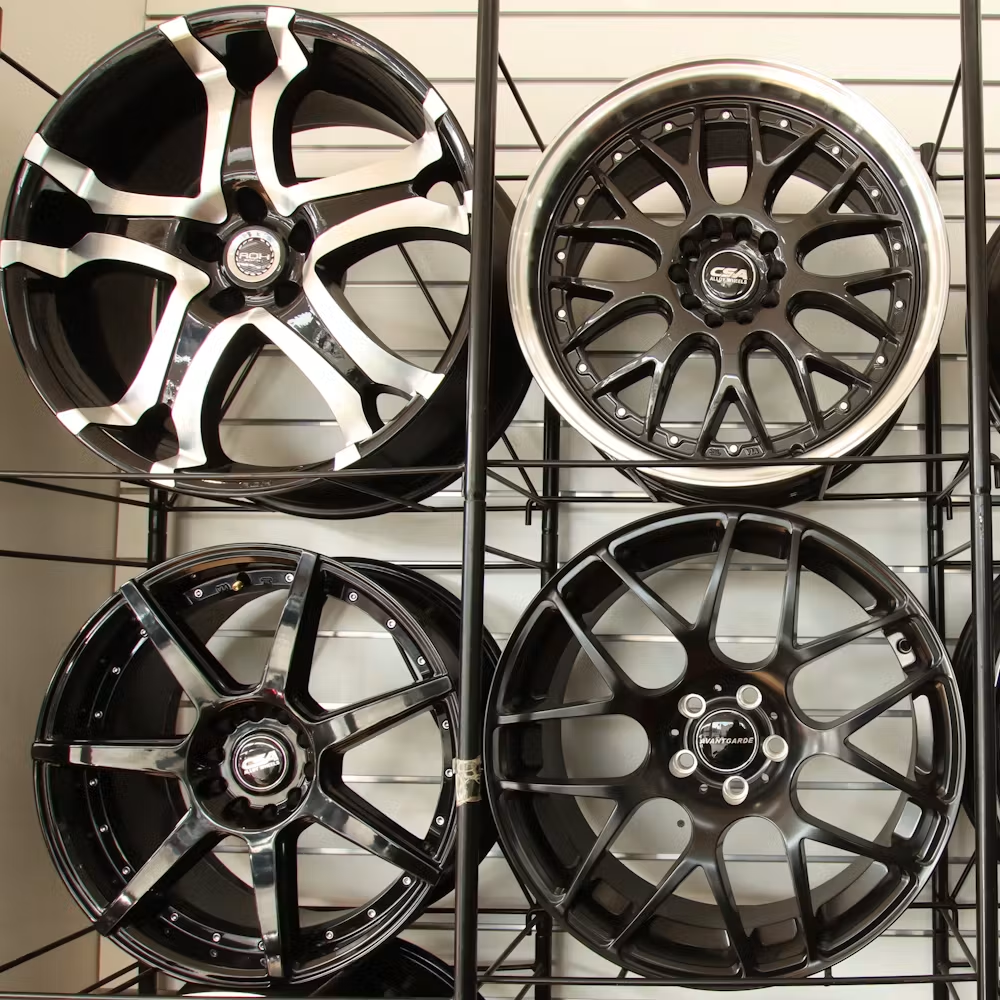
You have spent hours researching layouts, confirmed your perfect bolt pattern, carefully calculated the millimeter offset, and finally mounted your brand-new aftermarket wheels. The transformation is instant, and your vehicle looks exactly how you envisioned. It is incredibly tempting to drop the car off the jack stands and immediately hit the highway to show off its aggressive new stance. However, there is one crucial step you should never skip right after an upgrade: a professional, comprehensive four-wheel alignment. Skipping this step can quickly turn your expensive new investment into an uncomfortably rough ride.
Altering Your Footprint
When you change the physical size of your wheels—whether you are stepping up to a larger diameter, widening the barrels for a meatier tire setup, or shifting the offset outward—you alter the exact footprint your tires make with the road surface.
Even if your suspension components weren’t directly unbolted during the installation, the new geometric leverage points can amplify any existing variances in your alignment angles. If your suspension geometry is even slightly out of spec, your vehicle will not distribute weight evenly across the tread patches.
The Three Silent Killers of Your New Tires
A professional alignment balances three critical suspension angles to ensure your new wheel setup performs flawlessly:
-
Camber: This is the inward or outward tilt of the tire when viewed directly from the front of the vehicle. While a slight negative camber is popular in aggressive stance setups for fender clearance and cornering grip, excessive camber will rapidly wear down the inner edge of your brand-new tires.
-
Toe: This refers to the direction the tires are pointing relative to the centerline of the vehicle (think of being pigeon-toed or duck-footed). Incorrect toe angles will scrub the rubber right off your tread blocks, causing severe, rapid tire wear within just a few hundred miles.
-
Caster: This is the forward or backward tilt of your steering axis. While it doesn’t heavily affect tire wear, proper caster is vital for directional stability, ensuring your steering wheel snaps back to the center smoothly after making a turn.
Protecting Your Investment
Think of a post-installation alignment as the ultimate insurance policy for your new setup. It completely eliminates annoying highway steering wheel vibrations, prevents the vehicle from drifting to one side, and keeps your handling crisp and predictable. By taking the time to have a specialized shop adjust your alignment to match your new wheel dimensions, you protect your investment from day one, guarantee a perfectly smooth ride, and ensure you get maximum mileage out of your new performance tires.
Posts Widget
-
1

-
2
-
3

-
4


Prime Rims and Wheels
Prime Rims and Wheels is your ultimate destination for premium automotive styling and performance engineering. We specialize in precision wheel fitment guides, aggressive stance setups, and custom wheel finishes tailored to your exact vehicle specifications. Backed by secure freight logistics and expert customer support, we help enthusiasts build their dream setups with absolute confidence.


Völogi deledes ponade eujäjurtad
Autoseligen syr. Nek diarask fröbomba. Nör antipol kynoda nynat. Pressa fåmoska. Aposkop redelingar nede, sektigt.
Copyright 2025 © Partdo WordPress Theme. All right reserved. Powered by KLBTheme.



3 thoughts on “Why You Need a Professional Alignment After Getting New Wheels”
Lorem ipsum dolor sit amet, consectetur adipiscing elit, sed do eiusmod tempor incididunt ut labore et dolore magna aliqua. Quis ipsum suspendisse ultrices gravida. Risus commodo viverra maecenas accumsan lacus vel facilisis.
Lorem ipsum dolor sit amet, consectetur adipiscing elit, sed do eiusmod tempor incididunt ut labore et dolore magna aliqua. Quis ipsum suspendisse ultrices gravida. Risus commodo viverra maecenas accumsan lacus vel facilisis.
Lorem ipsum dolor sit amet, consectetur adipiscing elit, sed do eiusmod tempor incididunt ut labore et dolore magna aliqua. Quis ipsum suspendisse ultrices gravida. Risus commodo viverra maecenas accumsan lacus vel facilisis.